The Cheese Pizza Culture of Boulder, Colorado Explained

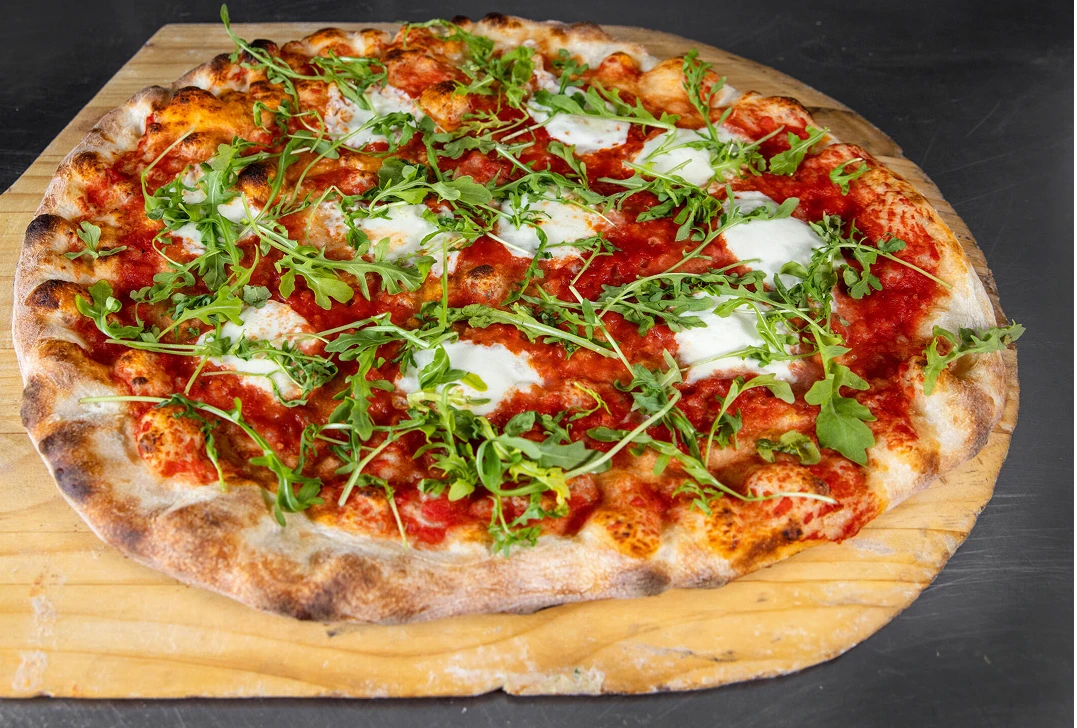
Ask ten people what makes a pizza town, and most will talk about pepperoni cups, wood-fired blistering, fermented dough, or the local place that stays open later than it should. Ask a cook, a restaurant owner, or a longtime regular, and you often get a simpler answer. Order the cheese pizza first. If the plain pie is good, the rest usually follows.
That idea matters in Boulder more than outsiders might expect. Boulder is often described through other food identities first: natural foods, mountain-town dining, craft beer, coffee, brunch, wellness, and produce-driven restaurants. Yet tucked inside that broader food culture is a very particular relationship with pizza, especially with the unadorned cheese pie. The city’s version of pizza culture is less about excess and more about scrutiny. People in Boulder tend to pay attention to the base ingredients, the dough handling, the bake, and the balance. A cheese pizza in Boulder is not a fallback order. It is often the test case.
This is what makes Cheese Pizza Boulder, Colorado an interesting subject. The plain pie sits at the crossroads of the city’s values: ingredient quality, casual sophistication, student demand, family dining, post-hike hunger, and an expectation that even everyday food should be made with intention.
Why the plain pie carries so much weight here
In many cities, cheese pizza is the default group order, something chosen to satisfy everyone and impress no one. In Boulder, it tends to get judged more closely. Part of that comes from the local dining culture. Boulder diners are used to menus that identify farm sources, dough methods, and flour choices. They notice whether a tomato sauce tastes bright or flat. They care if the mozzarella browns properly or leaks grease. Even people who would Cheese Pizza Boulder, Colorado never describe themselves as food obsessive can be surprisingly specific about crust texture.
That local mindset changes what a basic cheese pizza has to do. It cannot hide behind toppings. It has to stand on structure. The dough needs enough flavor to matter on its own. The sauce cannot be sugary or muddy. The cheese has to melt evenly and support the pie rather than smother it.
Boulder also has a practical side that shapes these expectations. This is a city where people move quickly between activities. Lunch has to fit between meetings, classes, and trail time. Dinner might come after a bike ride, a long climb in the foothills, or a full day at the university. Pizza succeeds in Boulder partly because it can meet all of those moments. A good cheese pizza can be fast without feeling cheap, filling without feeling heavy, and familiar without being dull. That balance is harder to hit than many restaurants admit.
Boulder’s food identity leaves a mark on pizza
Boulder’s broader culinary reputation leans toward freshness, seasonality, and ingredient transparency. That sensibility affects pizza in obvious and subtle ways. The obvious part is sourcing. Many kitchens make a point of using better flour, better tomatoes, better mozzarella, or house-made dough with longer fermentation. The subtle part is restraint.
In some pizza cities, abundance is the point. Bigger slices, more toppings, extra cheese, richer sauces. Boulder often leans the other way. The strongest cheese pies tend to be composed with a lighter hand. There is enough cheese to create pull and coverage, but not so much that the crust buckles. Sauce is applied with some confidence, but not in a way that floods the center. The result can feel cleaner and more balanced, which suits local tastes.
That does not mean Boulder lacks indulgence. It simply means the indulgence is often disciplined. A well-made cheese pizza here may taste rich, but it usually still feels nimble. You can eat two slices and keep moving, which in Boulder is not a small consideration.
Altitude also enters the conversation, even if diners do not always name it directly. Baking at elevation changes hydration, fermentation behavior, and browning patterns. Experienced bakers in Colorado learn quickly that dough can dry out faster and react differently than it would closer to sea level. That matters for pizza. The best shops adapt, whether through higher hydration, adjusted proofing, or oven management. When a cheese pizza in Boulder has a crust that feels airy, crisp, and fully seasoned rather than brittle or chalky, you are often tasting that experience.
The student effect and the adult palate
Boulder is shaped by the University of Colorado, and university towns always have strong pizza habits. Students create steady demand for slices, late meals, easy delivery, and food that can work for groups. They keep pizza shops busy, and they support formats that can survive on volume and repetition. That energy matters because it keeps pizza woven into daily life rather than cordoned off as a special-occasion meal.
At the same time, Boulder is not only a college town. It is also full of professionals, families, longtime residents, and visitors who may be more selective about where and what they eat. That creates an interesting tension. Shops have to appeal to people who want a reliable, affordable pie on a Tuesday night, and to people who care Cheese Pizza Boulder, Colorado about dough fermentation, dairy quality, and oven style. Cheese pizza becomes the common ground.
When those two audiences overlap, the plain pie often becomes a shared standard. Students may want value and craveability. Parents may want a dinner that works for children without feeling like a compromise. More serious diners may use a cheese pie to size up the kitchen before they branch out. If a restaurant can satisfy all three groups with the same basic pizza, it has done something difficult.
This is one reason Boulder’s pizza culture does not always fit a single national style label. You can find influences from New York, Neapolitan, New Haven, and contemporary American artisan pizza, but the local market rewards adaptability over orthodoxy. A place may serve slices by day, whole pies by night, and still tweak its dough, cheese blend, or bake profile to fit the realities of Boulder customers. Purists may grumble, but adaptation is part of the local culture.
What Boulder diners often look for in a cheese pizza
If you spend enough time around pizza counters and open kitchens, patterns emerge. In Boulder, people often talk less about novelty and more about balance. They want the pie to feel considered. Not precious, just dialed in.
A strong cheese pizza in this city usually hits several marks at once:
- A crust with distinct texture, crisp at the edge or base, but still tender inside
- A sauce that tastes of tomato rather than sugar or dried herbs alone
- Cheese coverage that feels generous without becoming gluey
- Enough salt and char to stay interesting through the last slice
- A pie that holds up whether eaten immediately or ten minutes later
That last point deserves more respect than it gets. Boulder has a lot of takeout traffic. People carry pizza to parks, apartments, trailhead meetups, backyard tables, and brewery patios. A cheese pie that tastes excellent only in the first ninety seconds out of the oven may impress a critic, but not necessarily a local regular. Durability matters.
The role of lifestyle, from trailheads to patios
Food culture in Boulder is inseparable from movement. The city is full of people who plan their day around weather, daylight, and physical activity. That creates a different rhythm for pizza than in denser urban markets where the meal is often the destination itself. In Boulder, pizza frequently follows something else: a hike, a ride, a youth sports game, a brewery stop, a campus event.
This affects the kind of cheese pizza that thrives. Heavy pies loaded with oil and excess cheese can certainly find an audience, but many locals seem to prefer pizzas that replenish rather than flatten them. A crust with chew and structure feels more satisfying than one that collapses under dairy. A bright sauce can feel more welcome than a deeply sweet one. Even the size of slices matters. Foldable or neatly cut pieces suit the pace of the city.
Outdoor dining also helps keep pizza visible. Boulder has long embraced patios and informal public gathering spaces. Pizza travels well into those environments. A plain cheese pie in the middle of a table does not ask much of anyone. It suits families, mixed groups, and casual evenings. No one has to negotiate around strong toppings. That social convenience helps explain why the simplest pizza remains central even in a place with adventurous eaters.
The ingredient question, and why local expectations are high
People in Boulder can be demanding about ingredients, sometimes justifiably, sometimes a bit performatively. Still, the expectation exists, and pizza makers ignore it at their peril. On a cheese pizza, ingredient quality is exposed. There is nowhere for dull mozzarella or canned-tasting sauce to hide.
This is where Boulder’s broader values show up clearly. Diners often care about whether the dough is made in-house, whether the tomato flavor tastes fresh and clean, whether the cheese blend has actual character, and whether the crust shows fermentation rather than just yeast. Some want organic flour or local dairy. Others care less about labels than results. But the threshold for acceptable quality is often higher than in markets where pizza is treated mainly as cheap convenience.
There is also a cultural premium on honesty. If a shop presents itself as craft-focused, people expect the food to reflect that. Overworked dough, pre-shredded cheese textures, or sauce that tastes one-dimensional tend to get noticed quickly. Boulder is a town where customers can be forgiving about simplicity and unforgiving about shortcuts.
At the same time, value still matters. Boulder is not immune to restaurant pricing pressure. Rent, labor, and ingredient costs weigh heavily on independent operators. That can make the cheese pizza a difficult item to price. Customers see it as basic, but the economics are not basic at all. Better flour, better cheese, longer fermentation, and skilled labor all cost money. A shop has to decide whether to absorb those costs, charge more, or compromise. Diners may talk a lot about authenticity, but they also look at the total on the receipt.
Style diversity without a single dominant orthodoxy
Some cities have a clearly dominant pizza identity. Boulder does not, and that is part of its charm. The local scene is pluralistic. You can find thin, crisp pies that nod toward East Coast shops, softer wood-fired pies with leopard spotting, and thicker, more American-style offerings designed for heartier appetites. In that mix, the cheese pizza acts as the universal translator.
Because there is no single unquestioned local style, Boulder diners become fluent in comparison. They do not necessarily ask whether a pizza matches some rigid standard. They ask whether it succeeds on its own terms. Is the crust supposed to be airy and blistered? Then it should deliver that without turning soupy in the middle. Is it aiming for slice-shop reliability? Then the bottom should have structure and the cheese should reheat well. Different forms can thrive, but they have to be coherent.
That flexibility benefits chefs and owners. It allows experimentation within reason. A pizzeria can borrow from several traditions while still serving a cheese pie that makes sense in Boulder. This freedom may frustrate die-hard purists looking for doctrinal fidelity, but it reflects the city’s personality. Boulder often rewards thoughtful hybridization in food as in many other things.
Families, kids, and the underestimated influence of the simplest order
Any conversation about cheese pizza should take children seriously, not sentimentally, but practically. Families are a major part of the customer base for pizza everywhere, and especially in a city where active households often want an easy, broadly acceptable dinner after a busy day. Kids order cheese. Parents often pretend they are ordering for the kids, then finish the last slice themselves.
That reality pushes pizzerias toward consistency. A cheese pizza has to work for people with a limited tolerance for bitterness, spice, or structural mess. Yet if it is made too bland, adults lose interest. The best Boulder pies manage to be clean and accessible while still having enough crust flavor, acidity, and browning to satisfy older palates.
There is also an emotional dimension. For many residents, pizza is tied to routine: Friday night takeout, team celebrations, move-in week, ski-weekend returns, birthday tables, and low-key dinners during long work stretches. In those moments, cheese pizza often becomes the anchor order. It is the pie everyone agrees on. A city’s cheese pizza culture is, in part, a record of its shared ordinary life. Boulder’s ordinary life happens to be unusually food-aware.
Beer, coffee, and the larger ecosystem around the pie
Pizza culture never stands alone. In Boulder, it benefits from neighboring food and drink habits. Craft beer matters here, both historically and socially. A clean, well-balanced cheese pizza pairs beautifully with pale ales, lagers, or more hop-forward beers, especially when the crust has enough char to add bitterness and contrast. Even people who are not making formal pairings feel that relationship instinctively.
Coffee culture plays a quieter role. Boulder has plenty of residents who think deeply about roast profiles, fermentation, and sourcing. That same sensibility can bleed into how they evaluate bread and pizza dough. A town that notices extraction and origin in a cup will often notice fermentation and flour character in a crust. The language may differ, but the attention is similar.
Then there is the simple matter of social design. Pizza shops fit Boulder’s preference for spaces that are casual but not careless. They can host students, families, cyclists in layers, office groups, and out-of-town relatives in the same room without anyone feeling out of place. The cheese pie, more than any specialty combination, reinforces that inclusiveness.
What visitors often miss
Visitors sometimes arrive in Boulder expecting either strict health food or polished mountain-town dining. They can miss the everyday middle ground where pizza lives. That is a mistake. If you want to understand a place, look at what people eat when no one is trying to impress anyone.
A visitor trying to read the local pizza scene should pay attention to context as much as style. Notice who is ordering. Look at the mix of solo diners, students, parents, runners, coworkers, and weekend travelers. See whether people eat quickly and move on or linger with drinks. Notice whether the cheese pie appears on many tables even when there are flashier options available. Those details reveal more than a menu description does.
For a useful read on the market, a simple approach works well:
- Try a cheese pizza before ordering more elaborate toppings
- Eat at least one slice immediately and one after it cools slightly
- Pay attention to the crust underside, not just the top char
- Notice whether the sauce and cheese stay distinct or blur together
- Consider how the pie would function as takeout, not only dine-in
This kind of evaluation is not fussy. It is practical. Pizza spends part of its life in motion, especially in Boulder. A pie that survives the trip from oven to box to table with grace is often the one that earns repeat business.
Why the cheese pizza remains the truest measure
The deeper you look at Boulder’s pizza scene, the clearer one thing becomes: the plain pie tells the truth. Specialty toppings can be excellent and still distract from flaws. A cheese pizza strips the experience down to the essentials, dough, sauce, cheese, heat, timing, judgment. In a city that values quality but resists unnecessary showmanship, that clarity matters.
Cheese Pizza Boulder, Colorado is ultimately not about minimalism for its own sake. It is about standards. The city asks a lot from simple foods. It wants them to be casual, but not careless. Accessible, but not anonymous. Familiar, but not lazy. Pizza makers who understand Boulder seem to grasp that the cheese pie is not a blank option. It is a statement of confidence.
That confidence shows up when the crust has character before any topping is added. It shows up when the sauce tastes alive. It shows up when the mozzarella supports rather than dominates. It shows up when a pie suits a student lunch, a family dinner, a brewery patio, and a post-hike appetite without changing its identity.
A lot of food cultures reveal themselves through signature dishes dressed up with local mythology. Boulder’s pizza culture does something more modest and, in some ways, more honest. It reveals itself through the slice that looks simplest on the menu and proves, bite by bite, that simplicity is rarely simple at all.
Brooklyn Pizza
Address: 1647 Arapahoe Ave, Boulder, CO 80302
Phone number: +17203282324
FAQ About Cheese Pizza Boulder, Colorado
What is usually on a cheese pizza?
A standard cheese pizza consists of a yeast dough crust, a seasoned tomato-based sauce, and melted mozzarella cheese.
What is a cheese pizza called?
A basic cheese pizza is simply called a cheese pizza, a plain pizza, or a plain pie.
What is the best recipe for cheese pizza?
The best cheese pizza recipe uses high-heat baking, a simple raw tomato sauce, and a mix of low-moisture and fresh mozzarella cheese on a homemade yeast dough.